
Thinking about a facelift? You’ll want to know how long it takes to feel normal again. Here’s a clear look at facelift recovery time, broken down by what drives it, day by day milestones, differences between techniques, after care basics, and the warning signs that need a surgeon’s call.
Table of Contents
What Determines Your Facelift Recovery Time?
Facelift Recovery Timeline: Day by Day and Week by Week
How Recovery Differs by Facelift Type
Aftercare, Activity, and Returning to Work
When to Contact Your Surgeon and How to Plan Safely
Frequently Asked Questions About Facelift Recovery Time
Conclusion
What Determines Your Facelift Recovery Time?
The speed of recovery hinges on a mix of personal and procedural factors. Age matters because skin loses elasticity as we get older, so older patients often need a few extra days for swelling to subside. Health status also plays a role; diabetes, smoking, or blood pressure issues can slow healing.
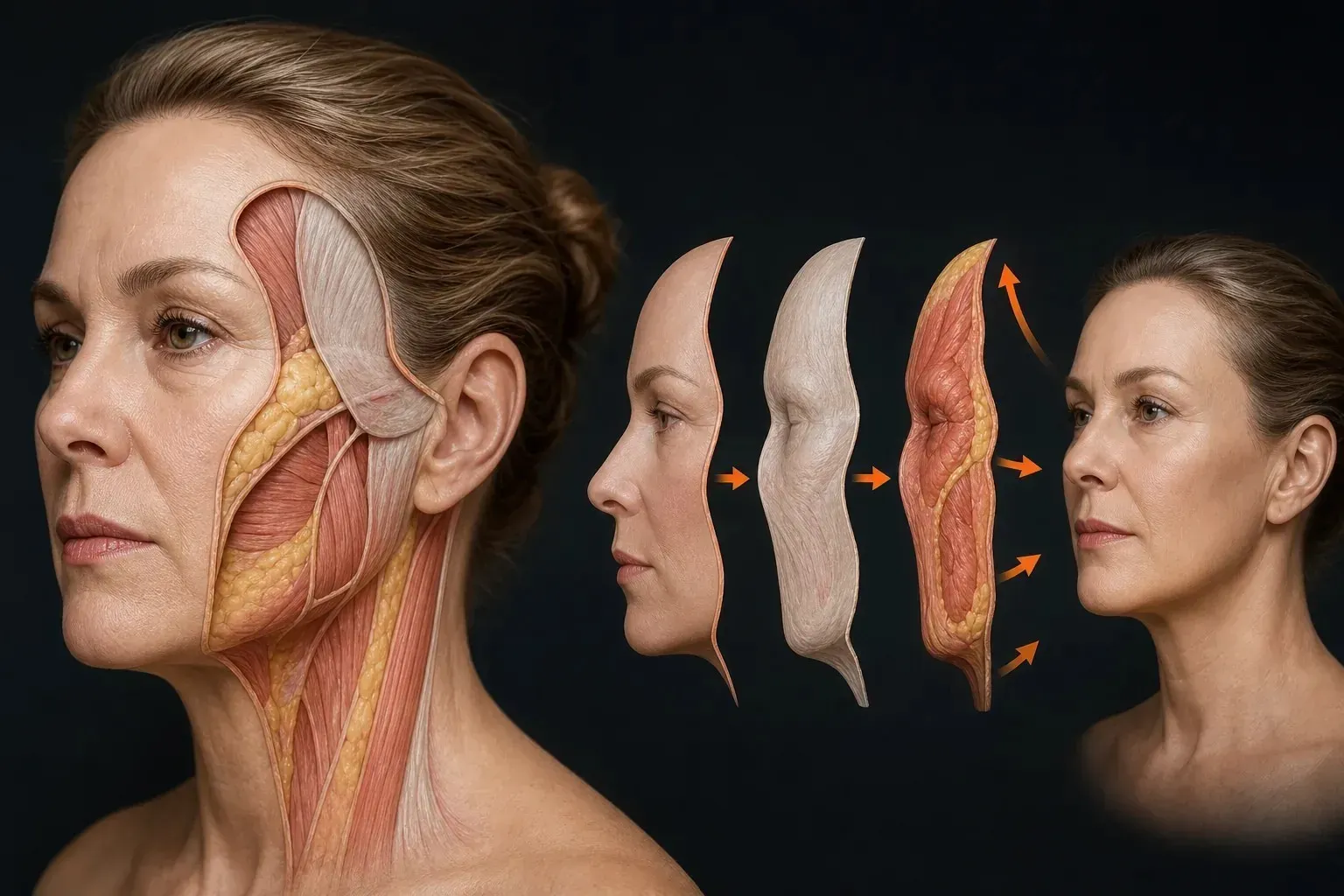
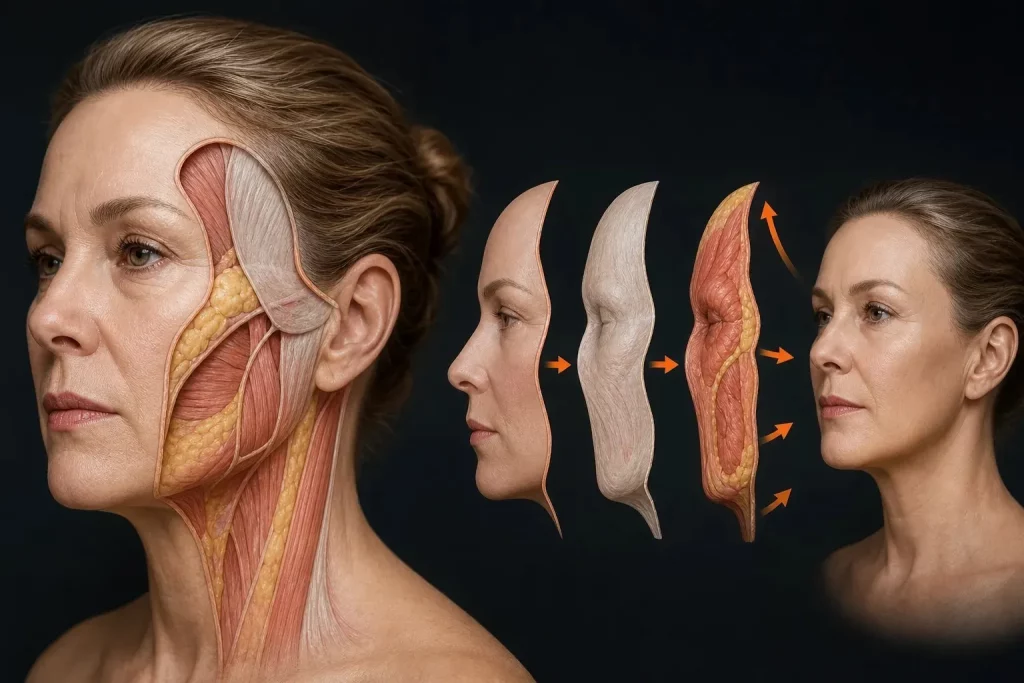
How invasive the facelift is matters too. A traditional facelift lifts skin and tightens the SMAS layer, while a deep plane facelift releases deeper ligaments and moves fat pads. The deeper work means more tissue disruption and a longer swelling phase, but it also gives longer lasting lift.
Each surgeon’s technique adds nuance. Dr. Rihani’s team at Ultimo Clinic follows a strict protocol: clean incisions twice daily, apply antibiotic ointment, keep the head improved, and walk lightly. That same routine appears in most published recovery guides, showing it’s a proven baseline. Extended Deep Plane Facelift & Necklift – Ultimo Clinic
Other variables include anesthesia type, the length of the incisions, and whether additional procedures (like eyelid lift) are done at the same time. The more you combine, the more you’ll need to rest.
Key Takeaway: Your individual health, the facelift depth, and post op care together set the recovery clock.
Facelift Recovery Timeline: Day by Day and Week by Week
The first 48 hours feel the most intense. You’ll be groggy from anesthesia and may have a drain in place. Pain medication helps you sleep, and the head should stay improved.
Day 2 usually brings a follow up visit. The surgeon checks incisions, changes dressings, and may remove a drain. By the end of day 3, bruising peaks and swelling is at its highest.
From days 4 to 6 you often drop prescription pain meds. Light housework is OK if you feel up to it. Swelling starts to shrink noticeably.
During the second week (days 7 14) most patients notice a rapid drop in swelling and bruising. Many feel comfortable returning to a desk job and can walk short distances without obvious signs.
Weeks 3 4 bring suture removal and the final stretch of swelling. By day 30, the face looks
“photo ready” for most people, though tiny residual puffiness can linger for months.
15.36average days to normal activity
Remember, each person’s curve is unique. Follow your surgeon’s instructions and keep a diary of how you feel; that makes it easier to spot anything out of the ordinary.
How Recovery Differs by Facelift Type
A mini facelift (or S Lift) uses shorter incisions and targets the lower face. Most people return to light activity in 2 3 days and see full social readiness in about a week. The trade off is a less dramatic lift.
A traditional SMAS facelift works above the SMAS layer. Swelling usually eases after 7 10 days, and most patients are back to work in 1 2 weeks. The technique offers a solid balance of lift and downtime.
The deep plane facelift goes beneath the SMAS, releasing the zygomatic and mandibular ligaments. Swelling clears in 7 14 days, and the median return to normal activities mark sits at
14 days. This matches the overall median in the dataset, making it the most balanced option for patients who want strong results without a long break.
A facelift combined with a neck lift adds a neck lift component, extending recovery by another
1 2 weeks. While some marketing claims a 1 2 day return, the deeper work on the neck means the overall downtime is longer.
Endoscopic (scarless) lifts use tiny incisions but often have the longest downtime, 30 42 days, because the limited access requires more tissue manipulation.
Each approach follows the same basic after care steps: clean incisions, keep the head improved, and walk gently. Facelift Lift Your Face, Restore Your Youth – Ultimo Clinic
Pro Tip: If you need a quicker return to work, discuss a mini facelift with your surgeon, but weigh the reduced lift against your aesthetic goals.
Aftercare, Activity, and Returning to Work
Post op care starts the moment you step out of the OR. Keep the dressing dry for the first 24 48 hours. Your surgeon will likely place a soft head sling; wear it all day the first week, then only at night the second week.
Head elevation is critical. Sleep on two or three pillows, or use a recliner, for at least two weeks to keep swelling down.
Movement matters. Light walking prevents blood clots, but avoid heavy lifting, bending, or vigorous cardio for 2 3 weeks. Most patients can resume desk work after about 7 10 days, provided swelling isn’t too visible.
Nutrition helps too. Stick to a low fat, soft food diet for the first few days to limit chewing stress. Stay hydrated, 8 10 glasses of water a day.
Skin care is gentle at first. Wash the face with a mild soap twice daily after the first week, using upward strokes. No harsh chemicals or retinoids until incisions fully heal.
Sun protection is a must for the next year. UV exposure can darken scars and increase swelling.
When to Contact Your Surgeon and How to Plan
Safely
Most signs are normal, but a few red flags need immediate attention. A rapidly expanding, firm swelling on one side could signal a hematoma; call your surgeon right away.
Increasing pain after the first few days, warmth, or spreading redness may point to infection. That’s another call home moment.
New numbness that doesn’t improve after a few weeks, or facial weakness that lasts beyond a month, should be reported. While nerve irritation often resolves, persistent issues need evaluation.
If you experience trouble breathing, sudden neck swelling, or a feeling of tightness that worsens, seek emergency care immediately. These are rare but serious complications.
Planning ahead reduces stress. Arrange a dedicated recovery space at home, stock up on easy to prepare meals, and schedule a friend or family member to help with daily chores for the first week.
Keep all follow up appointments; they let the surgeon catch any early problems before they grow.
Facelift Jakarta: Mengapa Teknik, Bukan Klinik, yang Menentukan …

Frequently Asked Questions About Facelift
Recovery Time
How long does it usually take to return to work?
Most patients feel ready to resume desk type jobs after 7 10 days, while those with more extensive lifts may need 2 3 weeks.
When will the swelling be gone?
Swelling peaks around days 3 4 and typically drops significantly by the end of week two; a residual puffiness can linger for a few months.
Can I shower right after surgery?
Gentle showering is safe after 48 hours, just avoid scrubbing the incision sites and keep them dry.
Is it normal to feel numbness?
Temporary numbness or tingling is common for the first few weeks as nerves settle back into place.
When is it safe to exercise?
Light walking starts immediately. Strenuous cardio or weight training should wait 3 4 weeks, and full high impact workouts can resume after 6 8 weeks.
What should I do if I notice a fever?
A fever after day three may indicate infection; contact your surgeon right away.
Conclusion
Ultimo Clinic’s deep plane facelift offers the best balance of lasting lift and a 14 day median
recovery. Schedule a consultation, follow the after care plan, and keep an eye on warning signs for a smooth healing journey.