
Deep Plane Facelift
Deep Plane Facelift repositions the deeper layers of the face — the SMAS, the retaining ligaments and the deep fat compartments — as one unit, instead of pulling on skin. The result looks natural and lasts longer, because the face is lifted from its foundation rather than tightened at its surface. dr. Enrina Diah introduced the technique in Indonesia in 2014 and has performed it here longer than any other surgeon.


What a deep plane facelift actually is
Most facelifts offered across Southeast Asia work on skin. The skin is pulled back and upward, the excess is trimmed, the edges are closed. The change is visible immediately — and that is precisely the problem.
Skin is the most elastic tissue in the face. It descends again. And when skin carries the entire load of the lift, the outcome is what people recognise as the "facelift look": tight near the ears, still heavy through the midface, expression slightly restricted, and a jawline that softens again within one to two years.
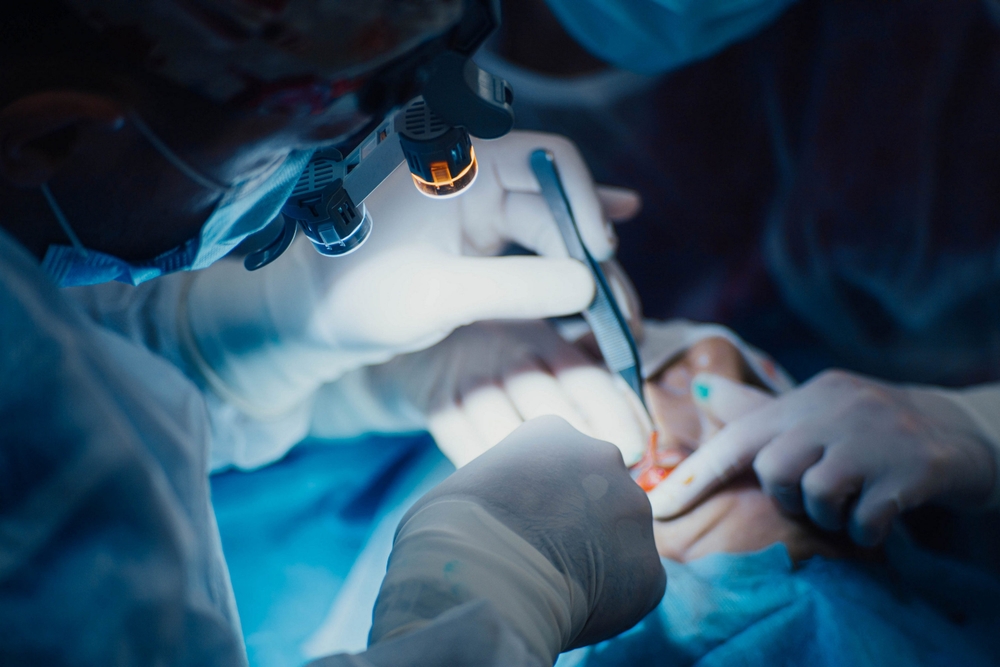
A deep plane facelift works one layer deeper — beneath the SMAS (superficial musculoaponeurotic system), the sheet of muscle and connective tissue that supports the face.
What happens in the operating room: dr. Enrina releases the facial retaining ligaments, the fibrous bands that tether the skin and SMAS to the underlying bone. With age, these ligaments hold tissue in its descended position rather than in its original one. Once released, the entire block — SMAS, deep fat, and the overlying skin — moves as a single unit back to its correct anatomical position.
The skin is never pulled. It is simply redraped over a structure that has already been restored.
That is why the result reads as natural. The face is not made to look different; it is returned to a position it genuinely used to occupy.
A different category, not a better version
Four techniques are sold under confusingly similar names. The outcomes are not comparable.
| TECHNIQUE | LAYER ADDRESSED | LONGEVITY | HOW THE RESULT READS |
|---|---|---|---|
| Thread lift / mini lift | Surface skin | Shortest | Modest change; reverses quickly |
| SMAS facelift | SMAS, folded or sutured | Moderate | Better, but the midface is often left behind |
| Deep plane facelift | Below the SMAS; ligaments released | Longest | Natural; the midface lifts with it |
| Extended deep plane | Deep plane + neck as one continuous system | Longest | Face and neck in harmony |
The difference patients feel most is in the middle third of the face — the descended cheek and the deepened nasolabial fold. Surface techniques pull skin laterally, which tightens the area near the ear but barely reaches the cheek. A deep plane lift carries the cheek fat pad back up over the cheekbone where it began.
This is why deep plane patients usually do not look operated on. They look like themselves, several years earlier.
Why most plastic surgeons do not perform it
This is rarely stated openly, and you should know it before choosing a surgeon anywhere.
The deep plane dissection runs very close to the branches of the facial nerve — the nerves that control the smile, the brow and the eyelids. Operating in this layer requires knowing exactly where each branch travels in each individual face, and how to release the retaining ligaments without injuring them.
That judgement does not come from reading papers. It comes from dedicated training and several hundred cases.
That’s why most plastic surgeons—including highly competent ones—choose to stick to superficial-plane procedures. It’s an understandable choice. But that means that when a clinic offers a “facelift,” you need to ask specifically: which plane technique will be used, and how many deep-plane procedures the surgeon has performed.
Who is a candidate — and who is not
- Descended cheek volume, so the face looks tired even when rested
- Deep, persistent nasolabial folds
- A softening jawline with early jowling
- Laxity that continues into the neck
- Generally 40s and above, in good general health
- Realistic expectations: to look rested, not to look like someone else
- Your main concern is skin quality — pigmentation, pores, texture, fine lines. A facelift moves tissue; it does not resurface skin. Skin treatment or energy-based devices may serve you better first.
- Your laxity is mild and you are in your early 30s. Operating early does not make the result last longer, and a lighter option may make more sense for now.
- You currently smoke. Smoking constricts small vessels and measurably increases healing complications. Cessation for several weeks before and after is normally required.
- You have uncontrolled medical conditions — hypertension, diabetes, clotting disorders, or ongoing blood thinners.
- You expect a permanent result. Deep plane is long-lasting, not permanent. Ageing continues; what changes is the starting point.
- Realistic expectations: to look rested, not to look like someone else
In consultation, dr. Enrina will tell you directly if you do not yet need this procedure, or if a different approach suits your concern better. Declining cases that are not ready is part of how this clinic operates.
Cost
What determines where a case falls in that range:
- Extent of dissection — face only, or extended deep plane including the neck
- Combined procedures — blepharoplasty, facial fat transfer, or a deep neck lift under the same anaesthesia
- Anatomical complexity — revision cases and structural asymmetry require longer operating time
- Anaesthesia duration — follows the length of surgery
Included: pre-operative consultation, laboratory workup, the surgery itself, anaesthesia and the anaesthesiologist's fee, operating theatre, medication, and all scheduled post-operative reviews.
Not included: treatments added outside the original plan, and accommodation for out-of-town or international patients.
The full breakdown is given to you in writing before you decide. Nothing appears afterwards.
An honest note on price comparison: You will find cheaper facelift offers in Jakarta, and you will find far more expensive ones in Singapore and the United States. Neither number tells you much on its own. The fair comparison is which layer is being operated on, who is operating, and how long the result holds. A surface lift that needs repeating in two years is not the cheaper option.
From consultation to surgery
A layer-by-layer assessment of your facial structure — bone, deep fat, SMAS, skin. You describe what bothers you; dr. Enrina explains the anatomy causing it. From there you decide together whether deep plane is appropriate, and how extensive it should be. For international patients this can begin as a video consultation.
The technique to be used, any combined procedures, a complete cost estimate, and a realistic recovery picture.
Laboratory workup and anaesthetic fitness assessment. Stopping specific medications and smoking as directed.
Operating time and overnight stay policy to be confirmed by dr. Enrina.
Scheduled in the first days, the first week, then periodically out to one year. For international and out-of-town patients, part of this follow-up is handled by video.
Recovery, Day by Day
A general picture. Every patient differs, and dr. Enrina will give you specifics for your case.
Days 1–3
Swelling and bruising peak. The face feels tight and thick — this is normal. Rest with the head elevated. Pain is usually less than patients expect.
Week 1
Sutures begin to come out in stages. Swelling starts to settle. Most patients are comfortable with light activity at home.
Week 2
Bruising fades and is usually coverable with makeup. Many patients are willing to see visitors. Some return to non-physical work.
Weeks 3–4
The face starts to look like you again. Residual subtle swelling that only you will notice.
Months 2–3
Most swelling resolved. Numbness around the ears and cheeks gradually recovers — this takes time and is entirely normal.
Months 6–12
Final result. Incision lines continue to fade. Tissues have fully settled into their new position.
What surprises patients most is not the pain. It is the length of the "almost normal" phase — weeks three to six, when you already look fine to other people but do not yet feel entirely like yourself. Knowing this in advance makes it considerably easier.
Risks, and how we handle them
Every operation carries risk. A clinic that avoids the subject is not protecting you.
The most common facelift complication, usually appearing within the first 24 hours. Early monitoring is therefore close; if it occurs, it is treated immediately.
Temporary weakness of the smile or brow can occur from nerve stretch and usually recovers over weeks to months. Permanent injury is rare, and this is precisely where dr. Enrina's craniofacial training matters most: detailed knowledge of facial nerve pathways is the core of that specialty.
Almost universal, almost always temporary.
Incisions follow the natural contours of the ear and hairline. Scars fade progressively but do not disappear entirely.
No human face is perfectly symmetrical before surgery, and none is afterwards.
Minimised through pre-operative screening and a dedicated anaesthesiologist.
If something does not go as it should, managing it is our responsibility — at no additional cost for corrections that form part of your care.
Why dr. Enrina Diah
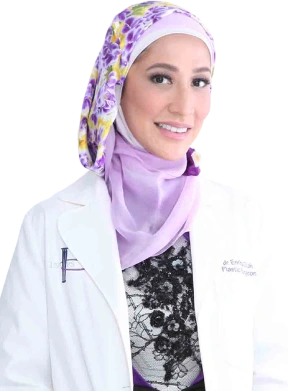
dr. Enrina Diah, Sp.BP-RE, KKF — Indonesia's board certification in plastic, reconstructive and aesthetic surgery, with craniofacial subspecialty — is the first internationally certified craniofacial surgeon in Indonesia, and introduced the deep plane facelift to Indonesia in 2014.
For this procedure specifically, those two facts reinforce each other.
Craniofacial training means understanding facial anatomy down to the bone — a depth beyond standard aesthetic plastic surgery training. A deep plane facelift is performed precisely between those layers. A surgeon who maps the face from its skeleton upward is working from a different map.
Practising since 2014 means more than a decade of deep plane cases in Indonesia, on Asian anatomy, rather than a technique recently added to a menu.
dr. Enrina was also among the first surgeons in Asia Pacific to perform the Extended Deep Plane technique, trained directly by the group of American surgeons who developed and refined it over three decades.
Frequently Asked Questions
What is the difference between a deep plane facelift and a regular facelift?
A conventional facelift pulls skin and the superficial layers. A deep plane facelift works beneath the SMAS — releasing the retaining ligaments and repositioning the SMAS together with the deep fat as one unit. The skin is only redraped, never pulled. The result looks more natural and lasts longer because the face is lifted from its foundation.
Will it look "pulled"?
The opposite. The pulled appearance comes from skin carrying the load of the lift. In a deep plane facelift the skin carries no tension, so expression stays natural.
How long do the results last?
Longer than surface techniques, because the lift is structural. Ageing continues — the result is long-lasting, not permanent. Your face will continue to look younger than it would have without the procedure.
How much time off work do I need?
Most patients are comfortable returning to non-physical work in the second or third week. For an important event, allow at least 6–8 weeks.
Can it be combined with other procedures?
Yes, and often it makes more sense — blepharoplasty, facial fat transfer, or a deep neck lift under one anaesthetic. One recovery, and a more harmonious result. dr. Enrina will assess whether combining is safe for you.
What is the right age?
There is no fixed number. Structural laxity decides, not the date on your passport. Usually 40s and above, though some patients need it earlier and many considerably later.
Can any plastic surgeon perform a deep plane facelift?
No. This technique requires a deep understanding of the facial nerve pathways and supporting ligaments, as well as specialized training and experience with hundreds of cases. Ask any doctor specifically: which layering technique they will use, and how many deep-plane procedures they have performed.
Can patients from out of town be treated?
Yes. The initial consultation can be conducted virtually, as can some of the post-operative follow-up visits. See the guide for out-of-town patients.
Start with a private conversation.
A one-on-one consultation with Dr. Enrina Diah—including an honest assessment of whether you need this procedure yet.
Phone +62 21 5140 0333 · WhatsApp +62 813-1797-994