
Liposuction Clinic: Procedures, Benefits, and Stages of Liposuction at Ultimo Clinic
Having an ideal body is not only about appearance, but also about health and self-confidence. In this modern era, various medical aesthetic methods continue to develop to help a person achieve a proportional body shape one of which is liposuction, or what is known as liposuction.
Meski sering dianggap hanya sebagai prosedur estetika, liposuction sejatinya adalah prosedur medis yang bertujuan membentuk kontur tubuh dengan aman dan terukur. Di klinik profesional seperti Ultimo Clinic, prosedur ini dilakukan menggunakan teknologi modern dan pengawasan dokter bedah estetika berpengalaman agar hasilnya maksimal serta tetap alami.Sebagai seorang dokter kecantikan, saya akan menjelaskan secara komprehensif mengenai apa itu liposuction, bagaimana tahapan prosedurnya, siapa yang cocok menjalani tindakan ini, hingga tips perawatan pasca operasi agar Anda dapat memahami prosedur ini dengan benar sebelum menjalaninya.
What Is Liposuction?
Liposuction or liposuction is a medical procedure that aims to eliminate excess body fat in certain areas through a suction technique using a special device called a cannula.
Unlike the weight loss program, liposuction is not a way to lose weight drastically, but to shape the body by eliminating fat that is difficult to lose despite exercise or diet.
Some of the most commonly targeted areas of the body for liposuction include:
- Lower and upper abdomen,
- Upper arm,
- Inner or outer thigh,
- Lower back and waist,
- Dagu (double chin),
- Boobs, as well as
- The area around the knee.
With modern techniques and experts at Trusted liposuction clinics, this procedure can provide natural, symmetrical, and long-lasting results.
Why can't body fat always be lost with Diet or exercise?
The human body stores fat in two main layers: subcutaneous fat (under the skin) and visceral fat (around internal organs).
Diet and exercise are generally effective for reducing visceral fat, but subcutaneous fat is often more difficult to remove because it is influenced by genetic factors and hormone distribution.
For example, a person can exercise regularly, but still have stubborn fat in the abdomen or thigh area. This is why liposuction becomes an effective solution to treat localized fat accumulation without having to lose weight to the extreme.
Types and techniques of Liposuction commonly used
In modern practice, there are several liposuction techniques that are adapted to the needs of the patient and the volume of fat to be removed. Here are some of them:
1. Tumescent Liposuction
This is the most common and safe technique. The doctor will inject a sterile liquid containing saline solution, local anesthetic, and epinephrine into the fat area. This fluid helps separate fatty tissue from muscle so that the suction process becomes easier and minimal bleeding.
2. Ultrasound-Assisted Liposuction (UAL)
It uses ultrasound waves to destroy fat before it is sucked out. Suitable for areas with dense fat such as the back or chest of men (gynecomastia).
3. Laser-Assisted Liposuction (LAL)
Rely on laser energy to soften fat and tighten surrounding skin. This procedure also helps stimulate collagen production so that the skin appears smoother post-surgery.
4. Power-Assisted Liposuction (PAL)
Using a fast vibrating cannula to help doctors break down and suck fat more efficiently, suitable for large areas of the body.
At Ultimo Clinic, the doctor will determine the best technique based on the patient's body condition, type of fat, and aesthetic goals.
Tahapan Prosedur Liposuction di Ultimo Clinic
Liposuction procedures at Ultimo Clinic are performed with priority to safety, comfort, and proportional results.
The following stages are generally performed:
1. Initial consultation and examination
This stage is very important. The doctor will conduct a thorough analysis of the body, including evaluating:
- Body mass index (BMI),
- Body fat distribution,
- Medical history,
- Patient expectations and goals.
2. Preparation Before Surgery
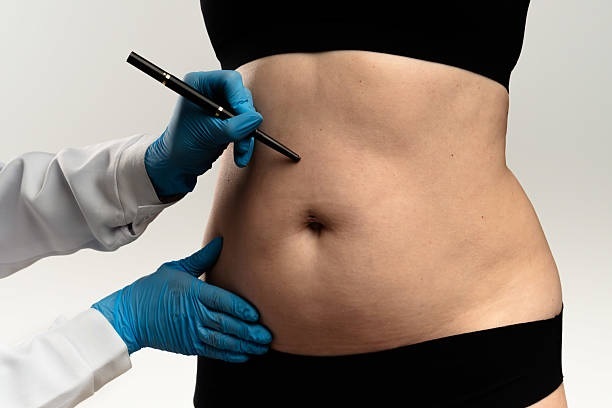
Before the procedure, the patient will undergo laboratory tests and may be asked to stop taking blood-thinning medications. The doctor will mark the area of the body that is the target of liposuction.
3. Anesthesia and incision
The procedure is performed under sedation anesthesia, depending on the area and volume of fat taken. The doctor then makes a small incision as a cannula (fat suction device) is inserted.
4. Liposuction
The cannula will be inserted into the subcutaneous fat layer, and the fat will be sucked off using a vacuum suction device (suction device). During the process, the doctor makes sure that The Shape of the body contours remains symmetrical and natural.
5. Early closure and recovery
Once the desired volume of fat has been removed, the incision is closed and the surgical area is bandaged.
Patients are usually asked to wear a compression garment for several weeks to help reduce swelling and maintain body contour.
6. Advanced recovery and control
The recovery process varies, but generally patients can move lightly in 3-5 days and return to normal activities after 2-3 weeks.Regular control is carried out to ensure optimal results and monitor tissue healing.
Benefits of Liposuction for Health and aesthetics
In addition to giving the body a more proportional shape, liposuction also brings a number of other benefits that are rarely realized:
- Increase Self-Confidence
Many patients feel more comfortable with their body after liposuction because the results look natural and harmonious with the overall body shape. - Address Certain Medical Conditions
For example, in lipedema (abnormal accumulation of fat in the legs) or gynecomastia (breast enlargement in men). - Helps Fitness Program Efficiency
After the stubborn fat areas have been removed, it is easier for patients to maintain their ideal body shape with moderate exercise and a healthy diet. - Tightens skin and improves elasticity
Especially in laser or ultrasound-based liposuction that stimulates the skin's natural collagen.
Side effects and risks to know
Although classified as safe, liposuction is still an invasive medical procedure that must be performed by an experienced surgeon.
Some common mild side effects include:
- Mild bruising and swelling,
- Temporary soreness or pain,
- Changes in skin sensations in the area of surgery.
But with professional treatment and modern technology such as in Ultimo Clinic, the risk of complications can be significantly minimized. The patient will also receive complete guidance on Wound Care, body fluid control, and recommended diet after surgery.
Post-Liposuction Care: The Key To Maximum Results
Recovery after liposuction plays an important role in the success of the final result. The following general medical advice is given:
- Use compression garments for at least 2-3 weeks.
- Avoid strenuous exercise until your doctor says it's safe.
- Sufficient intake of fluids and nutritious foods to accelerate tissue regeneration.
- Do not perform massage or skin treatment in the area of surgery without a doctor's permission.
- Perform routine controls according to a predetermined schedule.
The final results of liposuction usually begin to be seen in 3-6 weeks, with a slimmer and more proportional body shape.
Is Liposuction right for you?
Liposuction is recommended for those of you who:
- Have a stable weight but have stubborn fat areas,
- In good health condition,
- Have a fairly good skin elasticity,
- Not being pregnant or breastfeeding.
This procedure is not an extreme weight loss solution, but rather a body contouring procedure to help achieve a natural ideal look.
Want a direct consultation with a specialist?
Visit Ultimo Clinic a trusted aesthetic clinic that delivers modern liposuction procedures with cutting-edge technology, experienced doctor supervision, and proportional and natural results.
The ideal body shape is not just a dream, but the result of smart decisions and proper medical care.